STUDY TOUR REPORT
Theme: Economy of Rubber Plantation
Place of Visit: Mountain River Resort, Niuland, Nagaland
Date of Visit: 9th April 2026
Introduction
The Department of Economics organized a one-day study tour to Mountain River Resort, Niuland, Nagaland, on 9th April 2026. The tour was arranged by the faculty members of the department in coordination with the students of the 8th Semester. The theme of the study tour was “Economy of Rubber Plantation”. The main aim of the visit was to provide students with practical exposure and a better understanding of plantation-based activities particularly in relation to the economic aspects of rubber production beyond the classroom. The natural surroundings and plantation areas of Mountain River Resort made it a suitable location for such a learning experience. The programme was carried out with financial support from IQAC.
Objectives of the Visit
The main objectives of the visit were:
- To gain practical knowledge of plantation-based activities
- To understand the process of rubber collection and processing
- To understand the economic aspects of rubber plantation.
- To encourage interaction between students and teachers outside the classroom
- To develop teamwork and coordination among students
Methodology / Plan of Visit
A total of 13 students from the 8th Semester, along with 4 professors, participated in the study tour. The group left the college at around 7:00 a.m. and reached the destination in approximately two hours. The day’s activities were carried out in a planned manner, balancing both learning and engagement.
Description of the Visit
After reaching the resort, the group had light refreshments. This was followed by the preparation of lunch, where both students and professors took part together, making the experience more interactive and enjoyable.
Later, the group visited the rubber plantation within the resort premises. Here, students were shown how rubber is collected from trees, by making a cut on the trunk and placing a container to collect the latex, which is usually gathered after a few hours.
Students also observed how the collected latex is processed further by allowing it to solidify, then flattening it into sheets and leaving it to dry. Seeing these steps in person helped students clearly understand the entire process as well as its relevance in real-life economic activities.
Apart from this, the group also spent some time exploring the surroundings of the resort. Following lunch, a short fellowship session was conducted, providing an opportunity for interaction among students and faculty before departing for the return journey.
Observations and Findings
During the visit, students observed how rubber is collected from trees through the tapping process and how the latex is gathered. It was understood that proper technique and timing are important for efficient collection. Students also saw how the collected latex is further processed into sheets, giving them a clear idea of how raw materials are prepared for use.
The visit also helped students understand that rubber plantation plays an important role in providing income and employment for the people involved, such as caretakers and workers. It further showed how such plantation activities contribute to the local economy.
Outcome / Learning Experience
The study tour was helpful in connecting what students learn in class with real-life practices. It improved their understanding of plantation-based production and gave them a more practical perspective. The visit also gave students a better idea of the economic importance of rubber plantation, particularly in terms of income generation and employment. It also helped in building better coordination among students and strengthened interaction with teachers.
Financial Details
The study tour was conducted with financial support from IQAC, which provided a sum of ₹5,000. In addition, contributions were made by all six faculty members, who collectively contributed ₹2000 each and by students who contributed ₹300 per student. These funds were used for transportation, food, and other necessary arrangements for the trip.
Conclusion
Overall, the study tour to Mountain River Resort, Niuland, was a meaningful and enjoyable experience. It successfully met its objectives by providing both learning and practical exposure. The support from IQAC played an important role in making the visit possible.
Acknowledgments
We sincerely thank IQAC for providing financial support for the study tour. We also express our gratitude to the Department of Economics and all the faculty members for their guidance, support, and contributions.
Annexure: Photographs
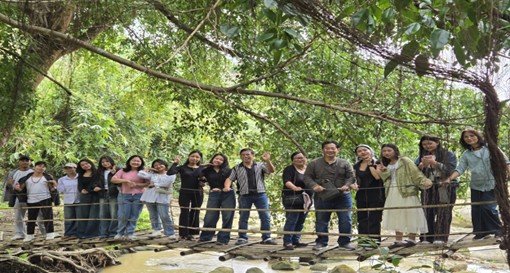
Figure 1: Group photograph at the hanging bridge, mountain river resort
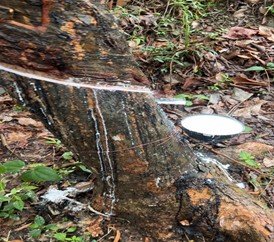
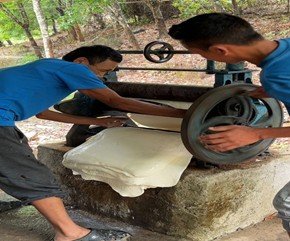
Figure 2: Rubber tapping ( latex collection) and subsequent processing into sheets
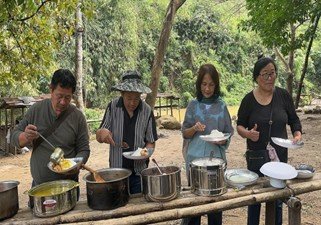
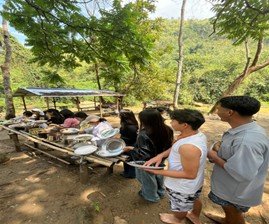
Figure 3: Students and faculty having lunch during the visit
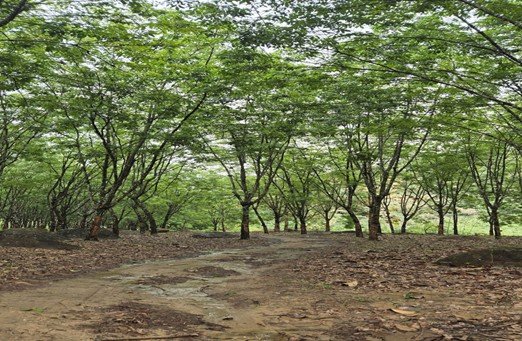
Figure 4: Rubber trees at the plantation site
Recorded by:
Class Representatives, B.A. 8th Semester, Department of Economics
(i) Miss Wanshom Y.M. Konyak
(ii) Mr. Haichikam